Showing posts with label folk. Show all posts

2/11/12

羅宇屋 - 桔梗


so, this is an album by the wonderful 羅宇屋. they play folk music with slight post-punk influences thrown in (as well super perfect pop elements on a few songs). the songs here use electric guitars, synths, and full drum sets with the traditional instruments (like the ever so subtle accordions) but it sounds perfectly natural. it's not like they're taking a "modern approach" to japanese folk music, but instead are simply playing folk music with modern instruments thrown in with traditional ones.

the songs all sound so exquisite, and each one is a stand-out track, so it's very hard for me to really pin-point a best song. but, i suppose if i was forced, i would pick the luscious new wave song, かように. it sounds like something out of a Studio Ghibli film (so, i guess i'm saying it sounds like it could have been composed by 久石譲). (another song i might pick out as a favorite would be the finale, which is a disco/funk song with traditional japanese folk chanting over the top of it. it's completely bizarre but works so, so well.)

anyways, you should certainly listen to this if only because there's nothing else out there that really sounds like these guys. you'll be doing yourself a disservice by not giving them a listen.


1. 人肌
2. 夏蝶
3. 百人浜
4. 明鏡止水
5. かように
6. かごめかごめ変奏曲


ENJOY

9/7/11

MSBR / 井内賢吾 - 壱


by request, here is . is a live collaboration between noise legend MSBR and folk oracle 井内賢吾, recorded on two nights in 1998, and in 1997. both artists are at their prime here. MSBR's synths and tape manipulations are hazy and swampy feeling. 井内賢吾's voice is as terrifying as ever. truly, he is a portal to jigoku. his guitars shake and quiver, like a plague victim coughing out its last breaths. when the oracle begins to howl, my heart palpitates, and i am filled with the deepest sense of dread, and of complete doom. MSBR's noisings are the shadows in this bunraku play, and 井内賢吾 is the lone priest, praying to the holy buddha, but receiving no comfort.

MSBR (aka 田野幸治) is dead. he lost his fight with cancer in 2005. i wouldn't be surprised in the slightest of 井内賢吾 is dead as well. as i have mentioned before, he has essentially disappeared from the world, leaving very little trace. it strikes me as oddly appropriate, considering the nature of his music. sheer bleak terror, shrieks of pain from the waiting grave.


1. Psychic Blue
2. live on 23-05-‘98
3. live on 24-01-’98
4. - (a japanese title. unfortunately i don't know what it is.)
5. live on 24-11-’97


ENJOY

7/24/11

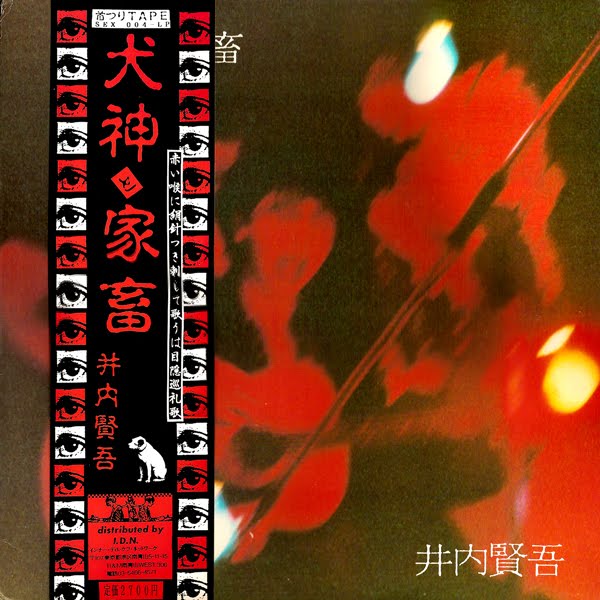
井内賢吾 - 犬神と家畜


i'm not sure why the first album that i posted by 井内賢吾 wasn't 犬神と家畜. it may have been because of the sheer revulsion that i have experienced when listening to this album. it is perhaps the blackest album that i have ever heard. it's very difficult for me to write anything about this album because of that.

to give you some idea of what you're about to hear (even if you did download the previous album by this madman that i posted, nothing will prepare you for this; the two albums are quite different), i'll explain to you the folklore behind at least part of the name (which reads as "Inugami to Kachiku", or "Dog-spirit and Livestock"). in shinto belief, an inugami was a dog spirit which would do your bidding if you summoned it. or, more specifically, if you made it; you see, an inugami is made by tying up a dog (or burying it up to its neck in the ground) and then placing food just out of its reach. the dog starves (or its head is cut off), and it returns from the dead as a ravenous servant which will bring about violence at its masters commands . . . if it chooses to. the inugami could just as easily turn on its "master". just as the inugami would be unforgiving for the cruel nature of its death, this album is also completely unforgiving in its delivery and its vision.

this album will eat you alive.


1. 序章
2. 半男の独白
3. 苦音の鐘の鳴
4. 紫色に沈むからだ
5. 愛の屠殺場
6. 四国巡礼、帰り道
7. 犬神と家畜
8. 肉魂菩薩
9. 自我喪失桃色牡丹
10. 四国・地獄・時刻


ENJOY

6/20/11

Forseti - JENZIG


Jenzig is, as far as i'm concerned, the seminal work of Andreas Ritter (aka Forseti). of course, even though his first album ended up being his best, his other two were also masterpieces. Forseti never failed to satisfy even for a moment while he was still recording; as far as i'm aware, he is currently in a comatose state. i've also heard that it's worse than that, and that he's actually vegetative. nonetheless, no other neofolk artist has ever surpassed what Forseti achieved on this album (unless you're willing to count 井内賢吾 as neofolk).

the mood here is not quite so somber or brooding as his later albums. instead, this is a very lighthearted record that evokes a childlike spring. which, of course, is odd for neofolk. regardless, this is the best of the best; it doesn't matter in the slightest that every other neofolk musician is pining for death and destruction and a melancholic autumn. i listen to Jenzig and i feel full of joy, and i feel refreshed. the most obvious examples of this joyful nature are on the opening track and perhaps "Heilige Welt".

every song here is perfect. i can't imagine anyone disliking this.


1. Gesang der Jünglinge
2. Am Abend
3. Heilige Welt
4. Abschied
5. Erlkönig
6. Wolfszeit
7. Jenzig
8. Jenzig II


ENJOY

3/1/11

宮田耕八朗 - Shakuhachi - The Japanese Flute


宮田耕八朗 is a shakuhachi player who is known for playing with the Ensemble Nipponia (a traditional japanese musical group). the music he plays on this particular album is quite haunting. this instrument primarily makes a low wind sound (though every once in a while a shrill note is played, and the effect sends chills up my spine), and the bamboo origins of the flute are quite obvious; the sound is thick and raspy.

absolutely chilling.


1. 本調
2. 山谷
3. 鶴の巣籠
4. 鹿の遠音
5. 秋田菅垣


ENJOY

2/7/11

佐井好子 - 胎児の夢


胎児の夢 is an album by 佐井好子. 佐井好子 has been a favorite of mine for years, so i'm not sure why i haven't posted anything by her yet. as far as i'm concerned, this woman is the apex of 1960/70s jap folk/prog-rock. she's everything about the genre that i love, cranked up to 10. her voice is like silk gloves stroking my ear/dick (?). absolutely luscious delivery of every word that comes out of her mouth.
besides her incredible crooning, the music itself is also wondrous. the first track opens up with a somber piano (accompanied by . . . castanets? and bongo drums). after that, though, the piano is replaced by spanish guitar and yoshiko's masterful crooning. it sends shivers down my fucking spine. absolutely epic.
the second track is a much more humble piece. gentle guitar strumming accompanied by a harp and bells. the combination of the first two tracks gives you a good example of what's to come.

my favorite track on the album is easily 青いガラス玉. it's such a tragic track, but still as epic as any of the other songs on the album. everything about the track feels so brooding.


1. ヒターノ
2. アルハンブラの青い壜
3. ある晴れた夜
4. 波止場
5. 春の夢
6. 海の沈黙
7. 青いガラス玉
8. 遍路
9. 白昼夢
10. 胎児の夢


ENJOY

11/13/10

井内賢吾 - あなたの狂気の春が咲く


あなたの狂気の春が咲く is an album by 井内賢吾 (or, Kingo Iuchi) from 1997. essentially, nothing seems to be known in the western world about Iuchi (and, when you put his name written in kanji into google, not many useful japanese sites come up, either). as another blogger put it, he seems to be a complete mystery. there aren't even any good pictures of him (the only ones that can be found are horribly blurred, in red, or in black and white [there are a few faces on his album Inugami to Kachiku, but i'm not sure if they're actually Iuchi or not]).

the music that Iuchi makes is a mix of noise and the blackest of folk. his voice pants, shouts, hisses, screams, and cracks up, and his guitar crackles and twangs, sounding more like a biwa than a guitar. in fact, from time to time, he does indeed sound like a biwa player from the early Edo period, chanting a story of ghosts and oni spirits in a buddhist temple.

worth noting is the spectacular album art by the legendary Suehiro Maruo.


1. 盲人の白い花
2. 夢犯
3. 紅虫
4. 溺泥の詩
5. 幻覚灯篭
6. LSD:宇宙は本当は無い
7. 肉のような嫌な匂い
8. 死ぬまであなたは苦しめばよい
9. かざぐるま
10. 夢うつつの世界


ENJOY

8/15/10

Current 93 - IMPERIUM


Imperium is the seminal work of David Tibet.

some history behind the album before we go on. allegedly, Tibet wrote this album upon what he believed would be his deathbed. according to various sources (that, at one point, were fairly easy to come by), Tibet was suffering both physically and mentally before this album was recorded. he had convulsions, high fevers, and i've even heard that he suffered from hallucinations during this time of illness. it is no surprise that this is the album he would write when death was so close by (in the same way that Rozz Williams' PIG was a perfect suicide note).

Imperium is a lament on the constant looming shadow of death that follows us all from birth to the grave. Current 93 have always been known for making miserable music, but after C93 began to make neofolk the misery was at least tinged with a drop of hope here and there. here is where Imperium differs greatly. there is not a shred of hope to be found on this album.

the album begins with the Imperium tracks (I, II, III, and IV). "Imperium I" begins with Tibet whispering the beginning of Psalm 23. the backing music is made up of contorted moaning, accompanied by a beautiful flute and guitar combo, giving the track an ancient feel, as if it had been plucked from ancient Jerusalem.
there is a seamless transition from "Imperium I" to "Imperium II" (the distorted moaning becomes more feminine [mind you, these aren't sexual moans, but religious]), and Tibet whispers: "how can there be pleasure, how can there be joy" in a flat voice, before singing, "as the whole world is burning". the sudden change from dry, barren, religious whispering to beautiful mourning is quite spectacular. however, the lamentations of death's grip upon life continues. it is bleak, but it is honest. this time around, Tibet is accompanied by a beautifully strumming harp, as well as what i believe is some sort of wind instrument.
the next two Imperium tracks are less beautiful, but equally as important for the album. "Imperium III" is accompanied by more of the satanic mumbling and grumbling from the previous two tracks, as well as a muffled, strangled orchestral sample. tibet hisses, "ten millions years, ten millions tears, i curse all gold and silver" and then references a previous masterpiece "Fields of Rape". we are cut down in fields of rape.
the final Imperium track is a sarcastic, mocking summary of Christ's martyrdom in Golgotha. it has a childlike sound to it, and he simplifies the crucifixion as if one was telling it to a child. "Judas, he betrayed the Christ, and sold him to the Jews . . . and the Jews, they crucified the Christ, and nailed him to a tree."

the second half (as the original vinyl was split into the title tracks, and then the last four), or "Be Locust Or Alone" does not indeed begin with "Be" on the edition that i share with you here (this edition, i believe, is from 2001), but instead begins with "Time Stands Still". "Time Stands Still" is a spectacular song. perhaps one of the best on the album. an uncredited man is sampled quoting from Peter Weiss' play The Persecution and Assassination of Jean-Paul Marat as Performed by the Inmates of the Asylum of Charenton Under the Direction of the Marquis de Sade (or simply "Marat/Sade"). over this, Tibet changes courses lyrically. now he discusses the inescapable condition of crippling old age (which he could relate to in his sickly state). however, he is not mournful about vitality lost so soon. instead, he mocks: "the tender grass is easily broke, yet who shall shake the sturdy oak? you are more fresh and fair than i, yet stubs do live when flowers die!"

finally, the traditional "Be Locust Or Alone" begins.

"Be" is often viewed as being comical or sarcastic by other reviewers due to the inclusion of the sampling of a child's (what i assume is a doll with a string) that obnoxiously repeats "na na na na!" this sample supplies the rhythm for the track. and while this may be humorous, the lyrics are as dark as ever ("this is where my life has lead me, this is where i choose to stay, this is where i fall apart").

up next is "Locust", the (in my opinion) highlight of this album. "Locust" is a rarity among C93 songs in that it has a strong beat. there is a very tribal feel to it. tibet sings almost joyfully at first, singing "la la la". the track slowly builds sonically (and the theme changes from an a passionate nostalgia for the pleasures of youth [so i assume] to a delirious and literal suicide plot).

the next track, "Or", does much the same thing; a slow build up an explosive finale. at first Tibet rants prophetically above a sample of a german man singing (about the might of the German race, judging from the sound of it). finally, when the song is halfway done and as the prophetic rant has turned for the worst, a post-punk guitar breaks in, and Tibet finally begins to shout: "TAKE ME TO MY DEAD CHRIST, CARY ME FROM SHORE TO SHORE!" the ending is lead by a militaristic drum beat, and it is chaotic, violent, and beautiful.

the final track, "Alone" is another favorite of mine from this album. another post-punk track, Tibet is most gloomy on this track. this most beautiful lyric on this entire album is spoken on this track: "it would have been better not to be the mother. it is sorrowful when a son goes away, let alone when he dies. i watched quietly as the grave was being dug, knowing that he won't come back, and i shall not be here for much longer." the bass of the guitar really picks up at this point, and Tibet finally seems to give all to death. at the end of the track, as Tibet is speaking of images of hell, his voice begins to echo, as if he is finally fading away.

a strange thing about this album is that no credits were included on any edition (i have a physical copy of the 1992 edition, and it only gives credit to Tibet). this leads me to believe that Tibet himself played the instruments (which is not a common practice for him).

1. Imperium I (6:07)
2. Imperium II (5:46)
3. Imperium III (7:01)
4. Imperium IV (3:15)
5. Time Stands Still (2:57)
6. Be (0:53)
7. Locust (9:47)
8. Or (9:21)
9. Alone (7:35)


Enjoy.

7/24/10

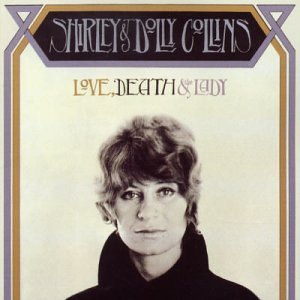
Shirley & Dolly Collins - LOVE, DEATH, AND THE LADY


Love, Death, and The Lady is a spectacularly beautiful album by Shirley & Dolly Collins. if you come to this blog then you more than likely already no who Current 93 are (i'll post some by them later). essentially, the younger of the two Collins sisters (Shirley) was a huge influence on David Tibet (the vocalist and creative force behind Current 93), so much so that he had her sing the final (and most powerful track) on his album Black Ships Ate The Sky. Shirley doesn't sing anymore because she insists that her voice is no longer pretty (while it is most certainly scratchy, it is by no means "ugly"; to the contrary, her voice is more powerful on that song (the final cover of the classic hymn "Idumea") than on any other song she's ever been apart of.
the song in question, on youtube.

this album was way before all that. it was before Dolly died, and before Shirley began her own solo career. the two girls were a major force (so insists wikipedia and other internet sources) in the british folk revival of the 50s/60s. though there is, to some extent, a "folk revival" going on today it is by no means related to what Shirley and Dolly were doing. this particular blogger has a sincere hatred and loathing of all things "freak folk" or "indie folk." i.e. whispered vocals coming from neckbearded hipsters wearing skinny jeans, keffiyehs, and ironic make-up. the fact that they are being referred to as "folk" makes very little since, considering that they are, for the most part, just pop musicians with acoustic guitars and scratchy voices.
anyways, enough of that. onto Love, Death, and The Lady. this album is full of covers of traditional folk songs, in other words these are songs that men and women of times of yore could have enjoyed (and would have played). Dolly plays piano, Shirley sings and strums on her guitar, and they sound amazing together. my personal favorite track is "Young Girl Cut Down in Her Prime" (a classic piece sung in the british military about the death and funeral procession of a young soldier, bu in this version the sex of the character in the song has been reversed). the low harpsichord repeating throughout the track brings out the darker themes of the lyrics. much of the lyrics on the album are much darker than they would at first appear. they deal with death, the loss of a loved one, and (on the first track) the literal threat of the reaper, where the reaper says to the woman in the song: "my name is death, cannot you see? lords, dukes, and ladies bow down to me, and you are one of those branches three. and you, fair maid, must come with me".
all the same, this is not a depressing album. the music and Shirley's voice is upbeat enough to bring joy, and not darkness, to the listener's ears.

1. Death And The Lady
2. Glenlogie
3. The Oxford Girl
4. Are You Going To Leave Me?
5. The Outlandish Knight
6. Go From My Window
7. Young Girl Cut Down In Her Prime
8. Geordie
9. Salisbury Plain
10. Fair Maid of Islington
11. Six Dukes
12. Polly on the Shore
13. Plains of Waterloo

ENJOY

6/14/10

Bloody Woods - COLOUR


Colour is the second album by the chinese neofolk group Bloody Woods. the band is made up of 白水 (Bai Shui) and Gu Dao. on this album, they are also joined by the vocalist Lamia, from Whisper Of Tears. not much information is available in english about these guys, but a couple sources (mostly just their last.fm page) would suggest that Gu Dao had left at this point, leaving just Bai Shui and Lamia. either way, they make gorgeous neofolk that gets its roots from western, as well as middle-eastern music (you'd think that a neofolk band from china would play traditional chinese folk, and i almost wish that they did).
the highlight tracks off this album are "Ai Vist Lo Lop" (which seems to be an old hungarian classic, though correct if i'm wrong about this) and "Orange Blossom Ring".


ENJOY